
John Bradshaw Layfield is a great professional wrestling example of transformation. From the hard knock south came a bruiser embodying the violent mercenaries of the Attitude Era. He was also one half of one of WWE’s tag teams, but his greatest metamorphosis was perhaps as the world champion who was also a limousine driver, cigar chomping businessman. JBL’s career is more than a case of transformation. It is more a case of timing and a demonstration of his relentless dedication and personality.
Beginnings: The Making of Bradshaw
John Layfield was born in Sweetwater, Texas. John’s transformation to a polished, suit wearing, wrestling God was built on toughness and mentality of a professional wrestling lineman, and was influenced earlier in his career, by names like Johnny Hawk, and Justin “Hawk” Bradshaw. Laying the groundwork for what would become the Bradshaw persona, he was truly a brawler and offense like his, came from the barrooms, rodeos, and dusty backroads.
The Acolytes and the Ministry of Darkness
A true career defining moment came for Bradshaw, when he joined Ron Simmons (Faarooq). The Acoltyes was a hard hitting team and their presence alone was an intimidating and dangerous enforcement. The time in The Undertaker’s Ministry of Darkness gave them an unforgettable and violent atmosphere. They were muscle, not flashy technicians or comedy sidekicks.
Their very presence backstage signaled the potential for chaos.
The APA: Beer, Cards, Doors, and Attitude Era Magic
Bradshaw and Simmons made the most of this transformation. The APA’s creation took the duo from being simply a tag team to their own universe in the WWE. The APA “office” is an iconic backstage scene during the Attitude Era. The creative placement of a door frame, table, some cards, money, beer, and two very intimidating men signified how the APA offered their services to wrestlers who were brave enough to answer the door. Knock on the door, “go inside” the APA office and the WWE universe accepted the APA and their gimmick as a legitimate business.
Simmons’s character was dry yet dominant, with an intimidating presence and timely reacting with single words. Bradshaw was a vibrant, aggressive presence, and an intimidating brawler. The duo’s presence didn’t signal a need for a storyline. Their gimmick was simple; pay them to take care of a problem, and they would gladly oblige.
Their legendary brawls added to the myth of the APA.
These clips capture everything that made the attitude era feel wild: broken furniture, flying fists, erupting chaos and the sitcom-like sense that the show could spill out of the ring at any moment. The APA didn’t just wrestle. They brought a whole lifestyle with them. They made every backstage poker game, every hired hit, and every backstage brawl feel like a natural extension of their personalities. In a company full of larger-than-life characters, Bradshaw and Simmons felt like the two guys you definitely didn’t want to mess with after midnight.
The Birth of JBL: The Ultimate Reinvention
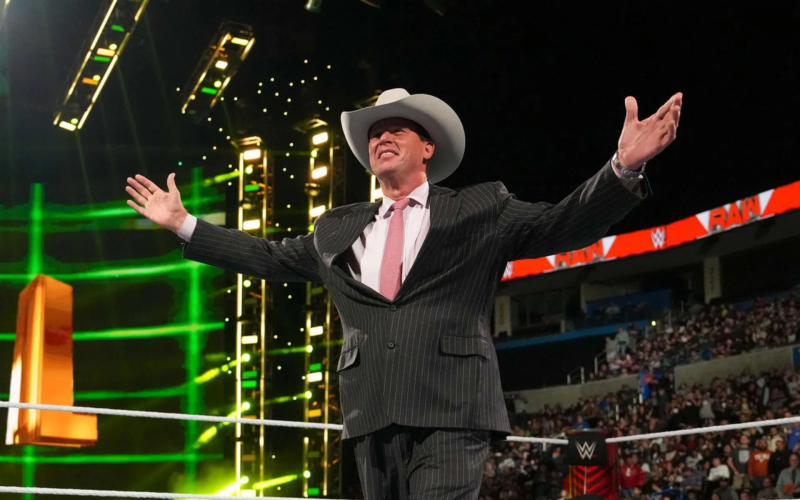
Then came one of the most drastic character changes of the Ruthless Aggression era. Bradshaw’s transformation came with the end of the APA and Ron Simmons’ retirement from full time in-ring competition. With the end of the APA, Bradshaw became John “Bradshaw” Layfield, JBL for short. The transformation from a beer-drinking, bar fighting brawler to a Wall Street elitist, Texan, upper-crust persona was bold. The transformation was a success because Layfield was right. The character wasn't random. It was his life, just heavily exaggerated. Layfield’s character was an extension of his interests, his confidence and his life experiences, most of which Leave people wanting to punch him in the face. Each promo dripped with an air of smug superiority. He arrived via limo dressed like a millionaire. With his killer wardrobe and promo skills Layfield created a persona for the ages, an arrogant elitist.
Every entrance told the audience that he thought he was better than them. This character trait was what made JBL so great as he never played the character halfway. He went all in on every single insult, every single cowardly escape, every single self-serving declaration, every single sneer, and every single insane thing he said until the audience was clamoring for someone to shut him up. This is elite heel work.
Rivalries That Defined the Wrestling God
Eddie Guerrero was the first golden opponent on JBL's road to stardom, and their rivalry helped JBL evolve from a repackaged mid-card worker to a bona fide main event heel. Guerrero was the beloved, emotional, and intelligent wrestler, while JBL was the cold, rude, impersonal, and Mean. Their feud had the perfect personal element to make it feel incendiary. For Guerrero's fighting spirit, JBL was the perfect foil, and the feud helped propel JBL into the world championship picture. Eddie Guerrero’s championship win created the perfect shock, and impact, to a now heel dominated Smackdown.
Against the Undertaker, JBL had the job of surviving the personification of legend. The Undertaker was darkness and credibility, while JBL was new-money, arrogant, and politically safe. Their matches and interactions helped JBL prove his title reign was more than a gimmick, plus he had to stand in the ring with one of the most credible wrestlers in the history of WWE and make the audience believe he could walk away from the match with the title at all costs.
JBL was a bully against Rey Mysterio. Unlike other opponents, Mysterio had the never-say-die attitude, and Mysterio’s small stature paired with JBL’s big size and verbal, as well as, physical intimidation, created the perfect storm. As JBL was obsessed with his status, the resistance Mysterio presented was powerful, and the confrontation compelling.
The rivalry with Batista was a different story, as it was also a battle of power.
Batista's presence was undeniable as he was explosive, direct, and viciously overwhelming. Contrarily, JBL relied on bravado, crafty shortcuts, and the idea that his wealth and intellect would bail him out of any situation. This rivalry was effective because it showcased JBL's cowardly bravado of 'the rich man' against a champion with the presence of someone who could quite literally end his day with a single spinebuster. It was the clash of the supremacy of man-made constructs versus the supremacy of brute strength.
Beyond the Ring: Analyst, Commentator, and Philanthropist
JBL stands out amongst many performers as someone who could take his character beyond the ring and into the realm of real life. This character was a market-savvy Wrestler and JBL, the real man, had the requisite education and interest. That education was made manifest as JBL transitioned into business and finance commenting with spots on Fox News and Fox Business. Afterward, he made his mark on WWE where his old-school, and at times, controversial opinions gave matches that extra bite, and his booming voice and sharp commentary provided a compliment to the matches.
His philanthropic work has also left an impact. This work, especially on his Beyond Rugby Bermuda initiative, has created an opportunity for young people through sport and mentorship. It highlights the different, and arguably better, persona of a man who made a career out of portraying an arrogant and aggressive character. This philanthropy demonstrates an impact beyond the ring, titles, and television, a mark that JBL has left on the wrestling world.
Conrad Thompson, Shoot-Style Fire, and the Power of the Promo
JBL and Thompson's collaboration has rediscovered Layfield's strongest gift: the art of the promo.
In discussing any aspect of wrestling, from its history to its inner workings, Layfield demonstrates the same passion that earned him his reputation as a despised champion. His shoot-style commentary works in part because of its scripted, yet educated, style. Layfield’s commentary does not come from a man simply reading pre-prepared statements. It comes from a man who lived through the business, suffered its divisions, and still has the passion to defend his position.
JBL has a natural gift with promos, in part, because he understands rhythm, and he understands contempt. Great JBL promos ease the crowd into a worldview that he builds in a matter of seconds, while directing their attention toward himself and away from his opponent. JBL’s promos stand out as dangerous because, in a world where other wrestlers and wrestlers would rather play it safe in a polished promo, his work felt as if it were designed to provoke a fight.
Legacy: Loud, Bruising, Brilliant
John Bradshaw Layfield’s Professional Wrestling career has been an incredibly impressive and powerful example of the evolution of Professional Wrestling. Whether as a cowboy, a member of the Ministry, an APA enforcer, an WWE Champion, a commentator, or an analyst, JBL has consistently demonstrated his versatility and passion, and he has undoubtedly cut through the noise with his impressive in-ring and out-of-ring storytelling. Few performers have ever been able to convince the world of Professional Wrestling of their versatility to this degree.
From the APA door to the white limo, from bar brawls to title fights, and paired with Fox News analysis and other shoot-style reflections with Conrad Thompson, JBL has always known one glaring thing: wrestling is about making people feel something. And love him or hate him, John Bradshaw Layfield has always convinced people to feel it. Loudly.
Add comment
Comments